St Peter's Church of England (VA) Primary School
Writing at St Peter's
Intent
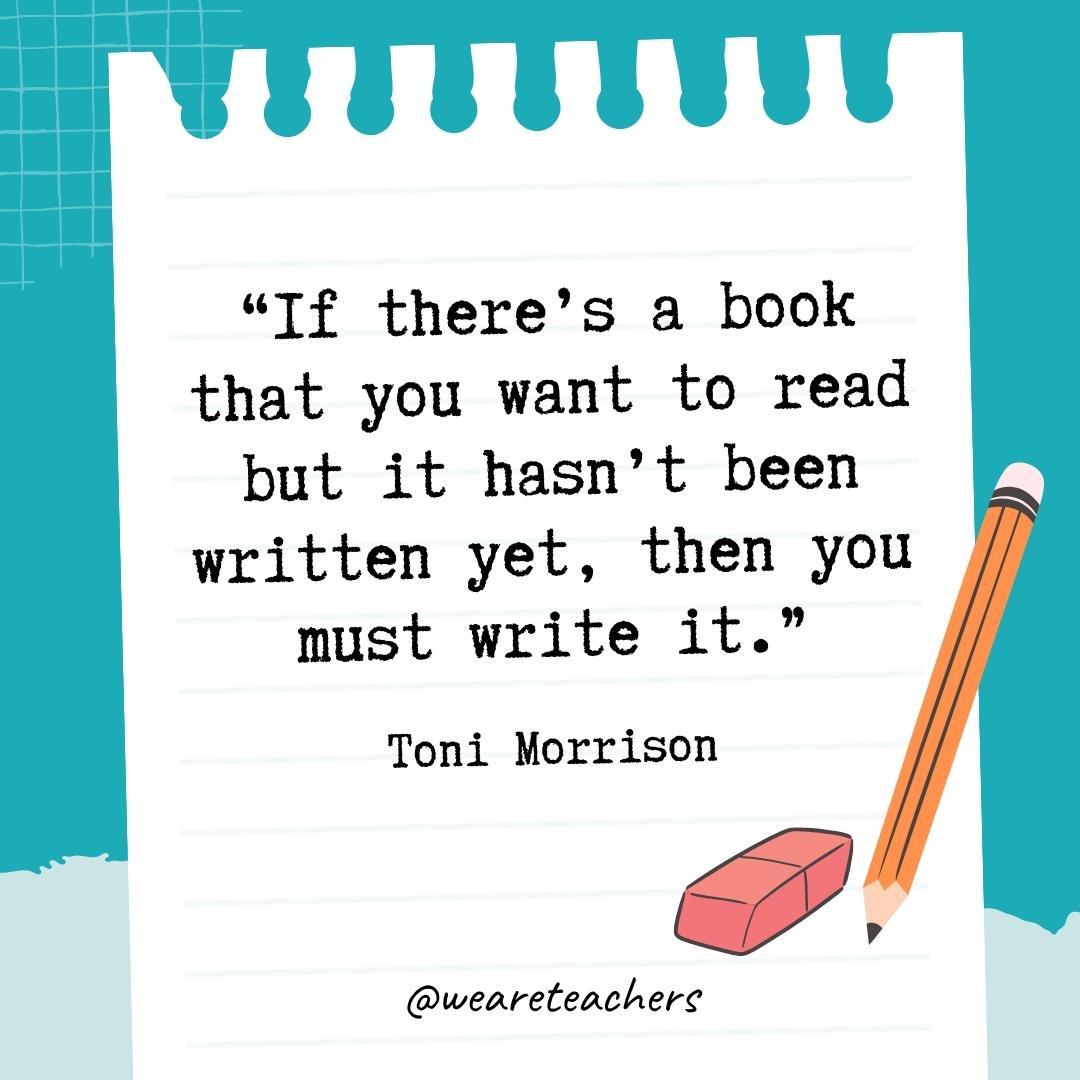
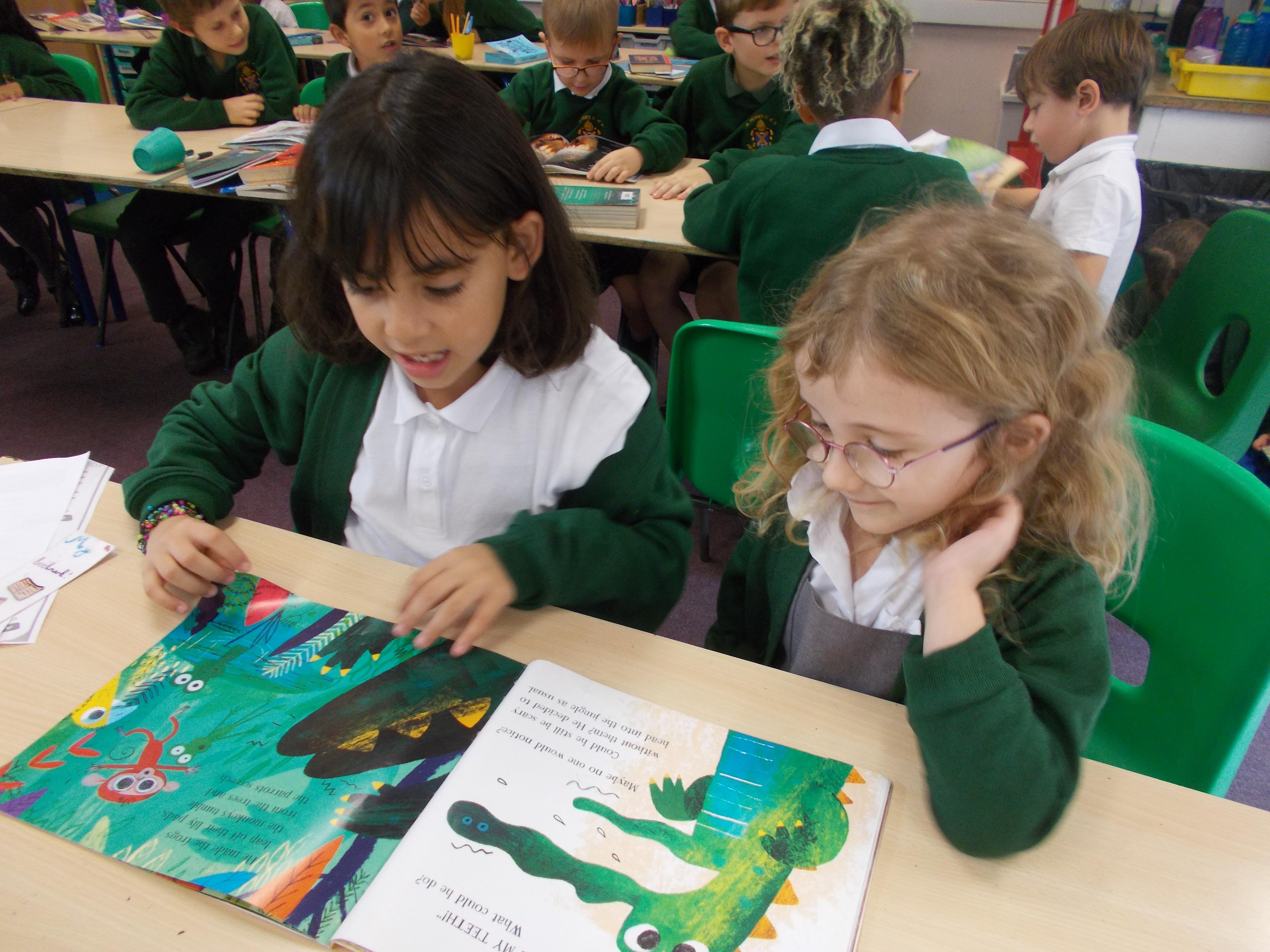
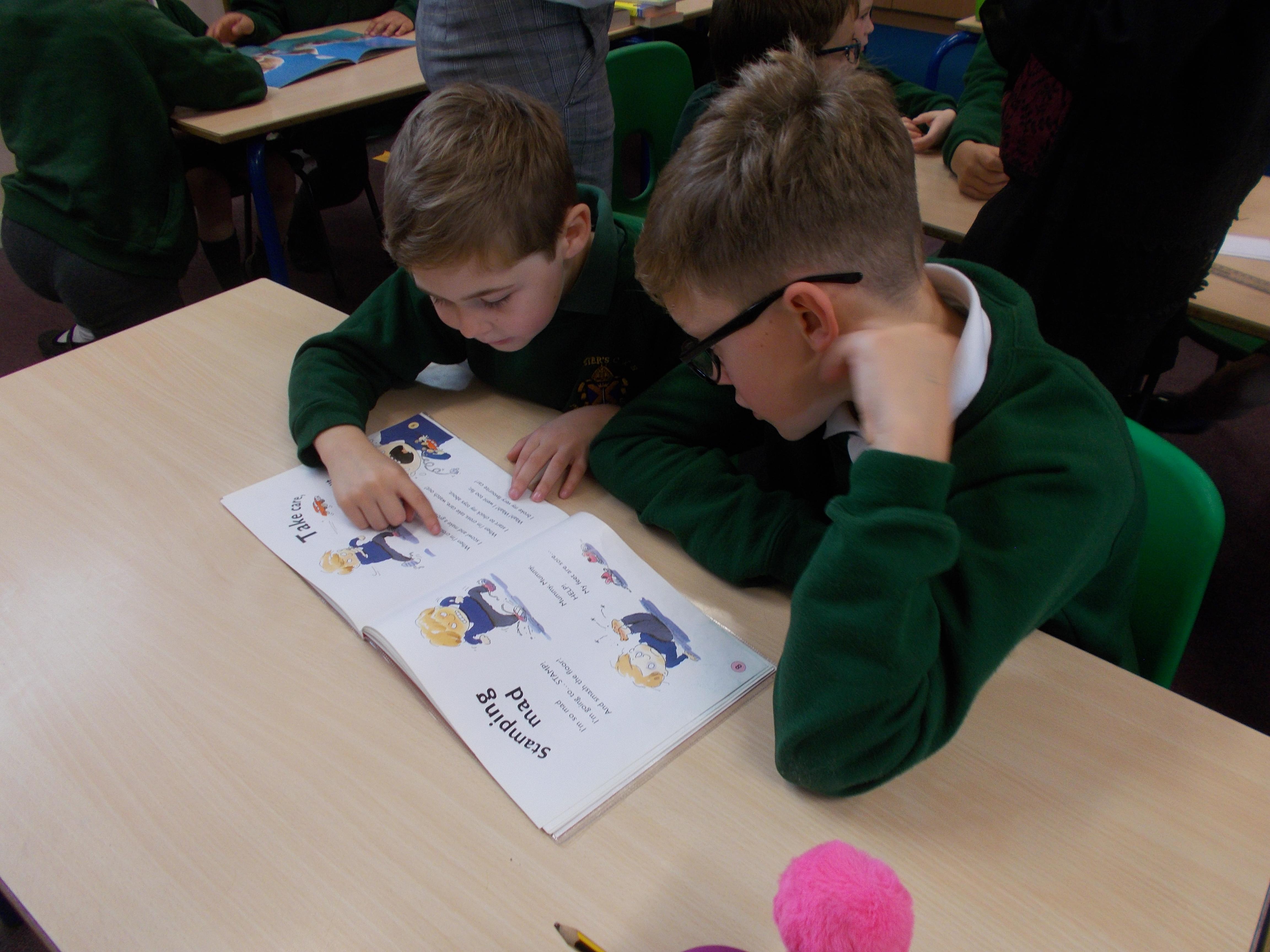
At St Peter's we believe that our children deserve a broad and ambitious English writing curriculum, rich in skills and knowledge, which ignites their passion to write and express themselves. We intend for writing to be centred on a high-quality text that captures the children's interest from the outset. The structure that we use to teach writing is a personalised approach based around best practice taken from ‘The Write Stuff'
Our main focus is placed on a love of story, enrichment and language in order to create ‘impact writers’. To engage our children in writing, we provide purposeful reasons to write where pupils learn to enjoy writing expressively, imaginatively and informatively for purpose. We make writing part of daily life, linked to play, fictional and real experiences. We encourage the children to develop personal voice, style, stamina and range as a writer.
Teachers are ambitious for our pupil outcomes, providing an approach to writing across both key stages that focuses on: correct letter formation, spelling age-appropriate words, understanding when to use a range of punctuation and to use creativity in their vocabulary and sentence structures. Children approach writing with courageous optimism and boundless creativity having had a clear, modelled process before tackling the genre independently. Our children have a deep knowledge of the purpose of writing and how expressing our creativity and imaginations in various way can benefit the wider world.
“Why write? Writing crystallises your ideas. It preserves them for others. It reveals the facets of your thinking. Good writing is creating a gem for others to discover.” – Jane Considine, The Write Stuff
The ability to communicate effectively, confidently and with clarity is a crucial life skill that is developed throughout their time at school, ready to be further developed as they transition to secondary school and beyond.
The link between phonics, reading and writing is built upon to enable children to become fluent in writing and accurate in spelling. From the simplest sentences in the early years, to the more complex, descriptive sentences in later years, the audience and purpose of writing is always kept at the forefront of children’s minds. This ensures that children think about how they communicate their ideas, whether it addresses their audience and whether it achieves its purpose, Providing our children with a rich curriculum, packed full of new ideas and experiences ensures that they have more knowledge to bring to their writing. Exposing them to a vast range of literature and texts, both fictional and factual, allows them to see how language can be used to entertain, inform, persuade and discuss.
The school uses the principles set out by Jane Considine's 'The Write Stuff'. The Write Stuff is based on two guiding principles; teaching sequences that slide between experience days and sentence stacking lessons. With modelling at the heart of them, the sentence stacking lessons are broken into bite-sized chunks and taught under the structural framework of The Writing Rainbow. Teachers prepare children for writing by modelling the ideas, grammar or techniques of writing.
Key aspects of The Write Stuff system include:
- The Write Stuff builds pupils’ confidence with sentence structure.
- The approach widens the repertoire of writing options for pupils.
- Pupils gain an understanding of the ‘whole’ piece that they are writing.
- Organisation of their ideas and cohesion between them is strengthened.
Implementation
Writing in KS1 and KS2
The children follow a method called ‘sentence stacking’ which refers to the fact that sentences are grouped together chronologically or organisationally. This approach encourages the children to engage with short, intensive moments of learning that they can apply immediately to their writing.
The children learn to sentence stack, focusing on the style of the author and impact of words and sentences. The planning of these is based on the teacher’s assessment of the children’s learning needs. An individual lesson is based on a sentence model, broken into three separate chunks:

To be great writers, our children need to know about The Three Zones of Writing. These three essential components consist of: the FANTASTICs (Ideas); the GRAMMARISTICs (Tools); the BOOMTASTICs (Techniques).


These areas are vital to assisting the children through the writing process. Through the three zones of writing, we begin to take a systematic approach to helping the children very explicitly at every stage of their writing journey.
- The FANTASTICs help children to sharpen their understanding of their own and others’ writing by encouraging them to be observant and
- The 9 GRAMMARISTICs cover national curriculum requirements, capturing the broad spectrum of key grammar knowledge.
- The BOOMTASTICs capture the ten powerful ways to add drama and poetic devices to writing. They help children structure their work, teaching them to showcase their writing voice, demonstrate originality and to take risks in a bid to capture the truth of a situation
E1 Edit:
The Revise Edit Type 1: These are often “little” adjustments or changes and tend to fall into one of these categories.
- Spelling
- Missed or additional words
- Punctuation
E2 Edit:
The Rewrite Edit Type 2: This is crucial and particularly for primary age pupils’ thinking needs to be attached to sentence rewrites. A rewrite would be appropriate if a sentence doesn’t make sense, could be restructured or generally improved.
E3 Edit:
The Reimagine Edit Type 3: This is when a writer wants to add more sentences to develop an idea further. Pupils are often resistant about adding more as it presents the problem of where to fit additional sentences. This is an ideal opportunity to train pupils to use ‘editing flaps’.
Editing flaps are extra pieces of paper that stick onto their writing and show the additional sentences added into their work.
Impact
At St Peter's, the Write Stuff Approach by Jane Considine has had a transformative impact on our pupils' writing skills. Through this structured, engaging approach, children develop greater confidence in their writing, learning to craft well-organised and creative pieces with clarity and flair. By breaking writing down into manageable chunks, the approach fosters courage, encouraging pupils to take risks and experiment with language. Pupils learn to embrace their creativity, producing vibrant, imaginative work that reflects their unique voices. The consistent use of this approach across the school ensures that pupils build on prior knowledge, leading to noticeable progression in both technical skills and expression. Our ambitious ethos drives pupils to strive for excellence in their writing, while the collaborative nature of lessons promotes compassion, as children support and inspire one another in their writing journeys. As a result, pupils at St Peter's leave with not only the technical mastery needed for future academic success but also a genuine love for writing and storytelling.
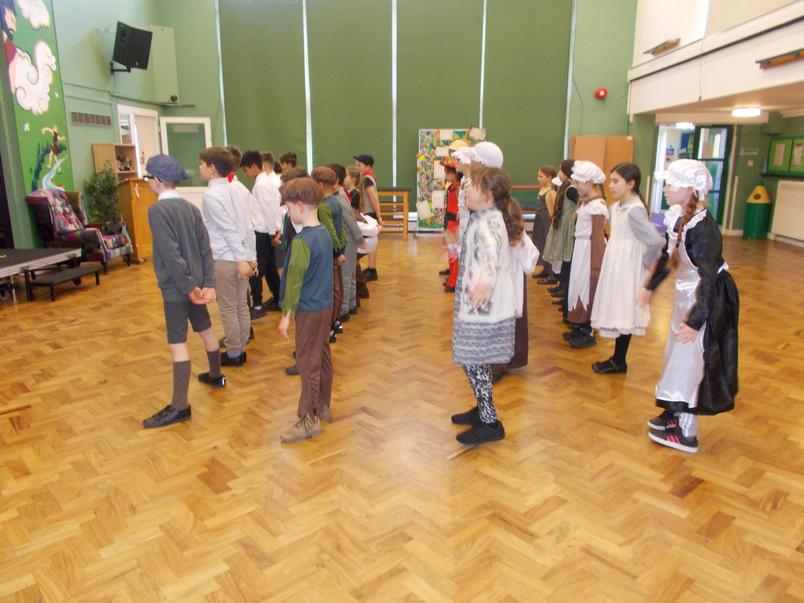
Children’s command of vocabulary is key to their learning and progress across the whole curriculum. Teachers will therefore develop vocabulary actively, building systematically on children’s current knowledge. We believe it is particularly important to introduce children to subject specific language, such as accurate mathematical and scientific vocabulary.